THE RESEARCH LIBRARY

Science.
A closer look.

Explore the research behind the materials, molecules, and formulation technologies relevant to our collection.

Explore the publications

PUBLISHED PERSPECTIVES

Follow your curiosity.

6 publications

Illustration of interwoven extracellular-matrix fibers and matrix components
Matrix structure & compositionIllustration
Tissue compositionLab + animal study

PLOS ONE · 2017

Inside Wharton’s jelly.

Characterizes a decellularized Wharton’s jelly matrix, examining its structural proteins, glycosaminoglycans, and use as a three-dimensional scaffold.

Study context

A decellularized scaffold was studied in laboratory and animal models. Its processing and use differ from Vantora’s finished products.

Publication: Decellularized Wharton’s Jelly from human umbilical cord as a novel 3D scaffolding material for tissue engineering applications
Read publication
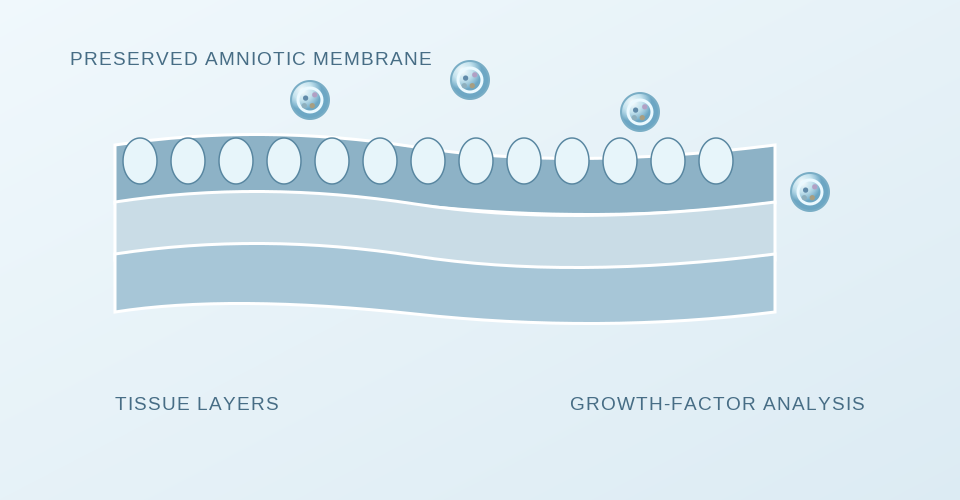
Illustration of amniotic-membrane layers and molecules examined in growth-factor analysis
Preserved membrane & growth factorsIllustration
Tissue compositionLaboratory study

Current Eye Research · 2000

Amniotic membrane. Molecular detail.

Measures growth-factor RNA and proteins in preserved human amniotic membrane, including the effect of removing the epithelium.

Study context

Preserved membrane was studied. Findings cannot be assumed to apply to a processed finished product.

Publication: Growth factor mRNA and protein in preserved human amniotic membrane

Read publication
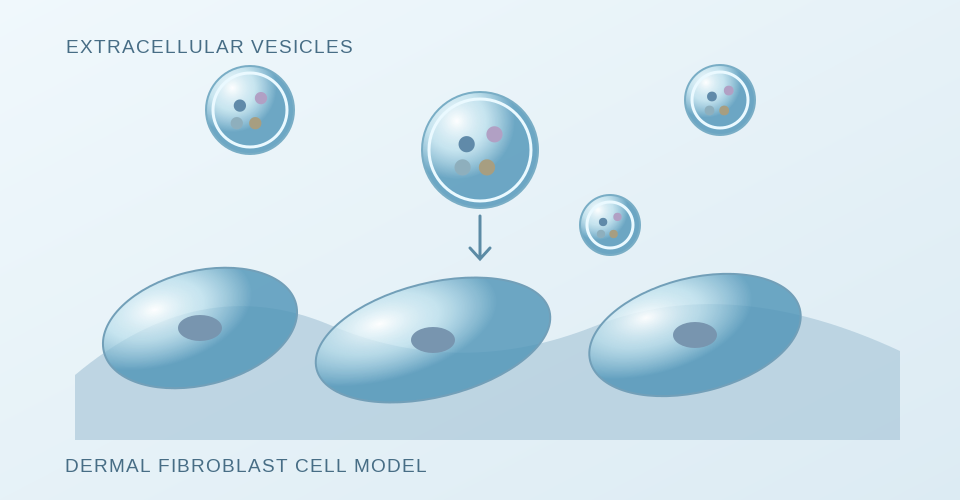
Illustration of extracellular vesicles above cultured dermal fibroblasts
Vesicles & dermal cell modelsIllustration
Extracellular vesiclesCell study

Journal of Extracellular Vesicles · 2019

Cellular communication, in focus.

Investigates adipose-derived stem-cell extracellular vesicles in UVB-damaged human dermal fibroblasts grown in the laboratory.

Study context

A different tissue source and an isolated-cell model; not evidence of topical clinical outcomes.

Publication: Functional recovery in photo-damaged human dermal fibroblasts by human adipose-derived stem cell extracellular vesicles

Read publication
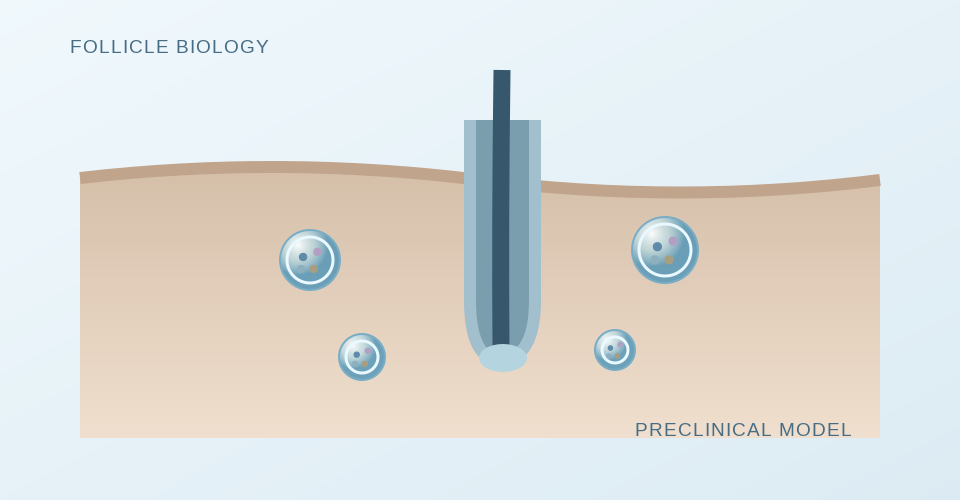
Illustrated hair follicle and surrounding vesicles in a preclinical model
Vesicles & follicle biologyIllustration
Scalp biologyCell + animal study

Scientific Reports · 2017

A closer look at follicle biology.

Studies mesenchymal stem-cell extracellular vesicles in human dermal papilla cells and hair-cycle changes in mice.

Study context

Preclinical research on a specific vesicle preparation; not proof of hair growth in people or VELORA performance.

Publication: MSC-derived extracellular vesicles, dermal papilla cells, and hair-cycle changes in mice

Read publication
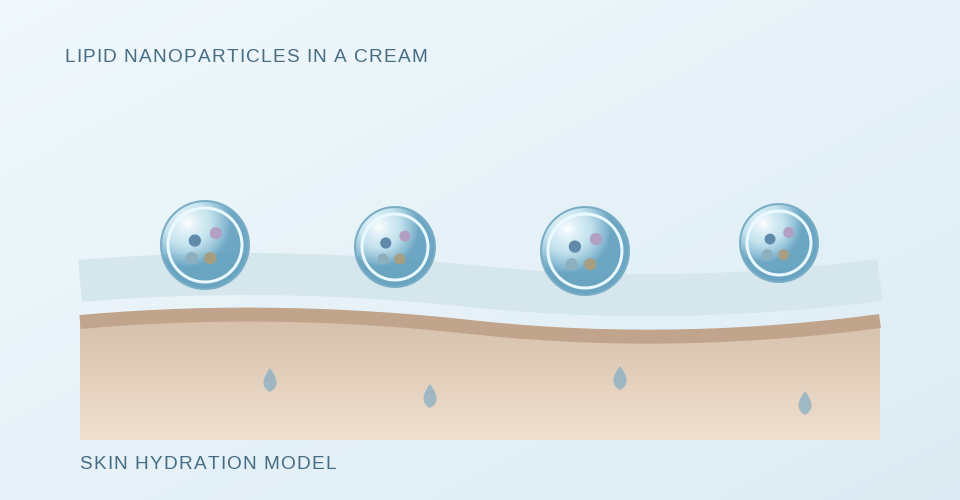
Illustration of lipid particles in a cream above a skin hydration model
Lipid carriers & hydrationIllustration
Topical formulationHuman study

European Journal of Pharmaceutics and Biopharmaceutics · 2003

Lipid carriers. Skin hydration.

Compares skin hydration and viscoelasticity using a cream containing solid lipid nanoparticles and a conventional cream.

Study context

Results relate to the tested creams and carrier system, not LUMERA’s proprietary formulation.

Publication: The influence of solid lipid nanoparticles on skin hydration and viscoelasticity—in vivo study

Read publication
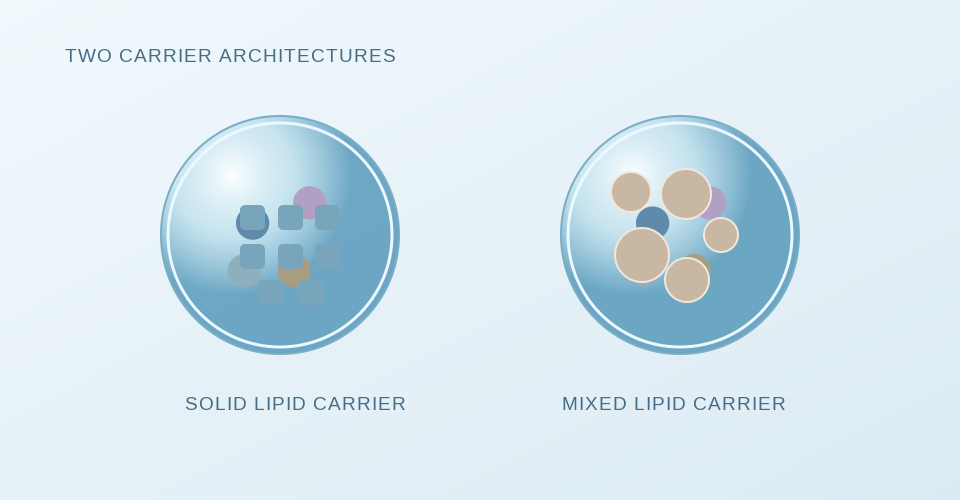
Illustrated comparison of solid-lipid and mixed-lipid carrier architectures
Lipid-carrier architecturesIllustration
Topical formulationReview article

Advanced Drug Delivery Reviews · 2009

The science of lipid delivery.

Reviews solid lipid nanoparticles and nanostructured lipid carriers for cosmetic and pharmaceutical skin formulations.

Study context

Background on carrier technology. This review does not test LUMERA or establish its performance.

Publication: Lipid nanoparticles (SLN, NLC) in cosmetic and pharmaceutical dermal products

Read publication

READ WITH PERSPECTIVE

Good science.
Clear distinctions.

The model matters. Laboratory and animal findings are early evidence. Human studies apply to the specific formulation and conditions tested.

The product matters. Tissue source, processing, dose, and route of use can change results. A study on one preparation cannot validate another.

Explore the Vantora collection